
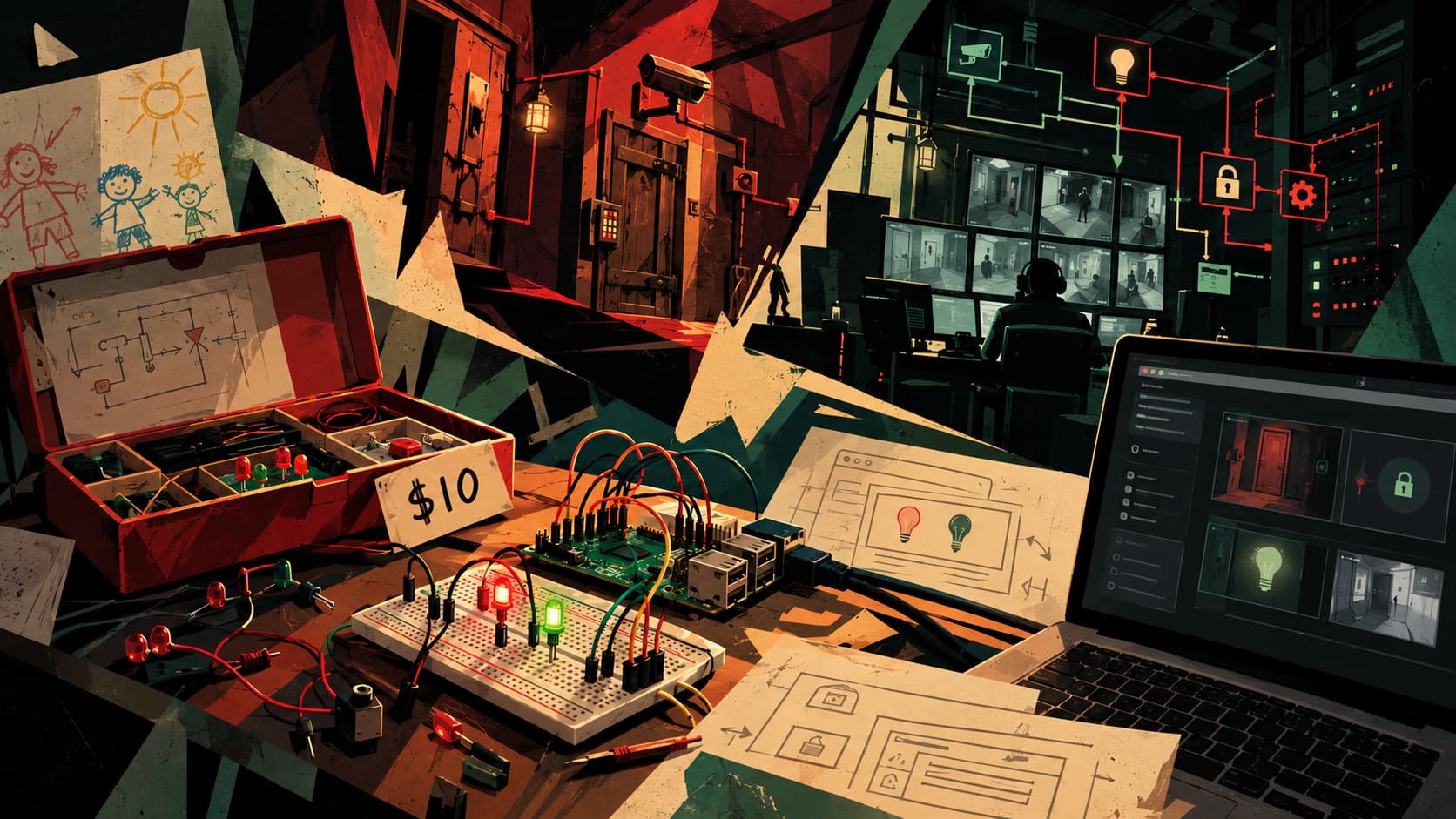
At the time, I worked as a system administrator. Programming seemed a little like magic to me. I could set up a server, configure a network, fix a computer, or find out why something had stopped working. Developers, as I saw it, created the software. That felt like a different level entirely.
Today I have years of professional development behind me. I build complex systems and can open an unfamiliar codebase with a reasonably calm “all right, let’s figure this out.” Which makes it funny to remember how accidentally it began.
The kit was for my kids
We were walking around town and stopped at an electronics store. I needed a few switches for the house. My kids spotted Mikronik, a small electronics kit, on a shelf. It cost me about $10 at the time, so I bought it.
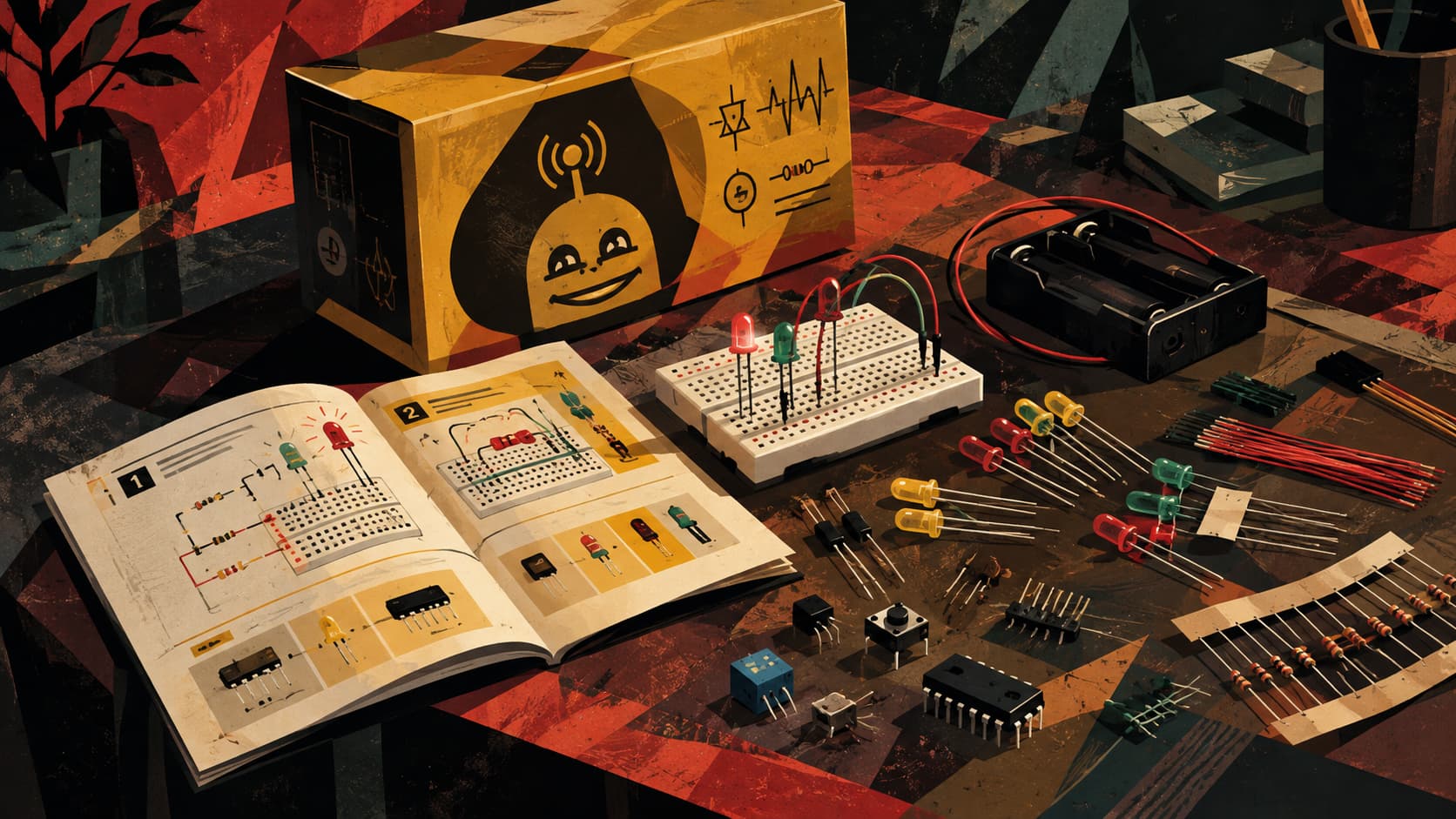
Inside were simple components and a handful of circuits to build. We spent a lovely evening connecting parts, lighting little bulbs, and talking about how electricity moves. It also gave me a good way to explain why sticking things into a wall socket, especially while barefoot, is a terrible experiment.
Educational mission accomplished. There was just one complication: I liked the kit more than the kids did.
Not long after, I went back to the same shop and bought more components. This time they were for me.
Then I saw the other side of an escape room
My then-wife and I loved escape rooms. If you have never played one, imagine a themed space full of puzzles, sensors, electronic locks, lights, sound, and hidden mechanisms. You place an object in the right spot, turn a lever, solve a clue—and a secret door opens. To a player, it feels like magic.
I wanted to know what was happening behind the walls. I asked the operators at one venue if I could see the technical side. They showed me.
It was wonderful chaos: wires, homemade boards, sensors, relays, cameras, LEDs, buttons, radios. The operators sat among it all like the crew of a tiny spaceship. They watched cameras and indicators, read messages, pressed buttons, switched devices, and spoke to players over the radio.
While I watched, one question kept bothering me: why did a person have to do so much of this by hand?
I barely slept that night
Back home, I kept thinking about the system rather than that particular room. There was a physical world of buttons, doors, lights, and sensors. There was an operator, a computer, and the current state of the game. Why not connect them?
Why should an operator have to remember which indicator meant what, or match a camera feed to a bank of lights? Could a clear interface simply show the room’s state? Could some actions happen automatically?
The next morning I began writing down ideas. Then I returned to the store and bought a Raspberry Pi.
My first real system
The Raspberry Pi has GPIO pins: physical contacts through which software can interact with the world. A button can send a signal to one pin. Another can drive an LED. A sensor can use a third. Suddenly the wall between code and a physical object becomes much thinner.
I ran a small web server on the Pi. A separate process watched the GPIO pins. When voltage appeared on a particular pin, it recorded the change and sent an event through a WebSocket. A browser received that event, JavaScript changed the DOM, and the state of a physical device appeared on another screen almost instantly.
GPIO worker WebSocket browser DOM
There is nothing especially mysterious about that chain now. Back then it felt like sorcery. I pressed a real button. My code understood what had happened. An interface on another device reacted.
I had not merely configured someone else’s software. I had imagined a system and made it work.
Of course, I can see a million problems now
Looking at that prototype ten years later is fun. At the time, the architecture seemed complete. Today I would ask a few uncomfortable questions before my first commit:
- What happens when there are more devices than GPIO pins? How are devices identified, and how do I version their configuration?
- What is the source of truth for the room’s state? How does it recover after a lost connection or a restart? What if two events arrive together?
- How do I detect a failed sensor, log hardware errors, update software in a running venue, and deploy more than one installation?
- And what happens if the Raspberry Pi dies in the middle of a game?
A small prototype grows adult engineering problems very quickly. But I did not need answers to all of them before taking the first step. If I had seen my present-day production checklist back then, I might never have started.
Then the hobby became a job
I showed the idea to people in the escape room industry. My home experiment turned into work surprisingly quickly. About a month after buying that kit for my kids, I was working as an escape room engineer. Roughly a year later, I received my first proper commercial offer as a software developer.
For someone who had recently thought of programmers as people in an inaccessible profession, that changed my view of what I could do. The most important result was not the Raspberry Pi, GPIO, or WebSocket. It was the first piece of evidence that I could build software too.
What I see in it ten years later
I used to think that was when I discovered I could program. Now I think the more important part happened before I wrote any code. I saw an unfamiliar system, became curious about how it worked, broke it into parts, noticed where people were doing repetitive work, and imagined a different way to connect those parts. Only then did I look for the technology.
In the years since, I have worked with different languages, frontend and backend systems, teams, Web3, my own products, and AI agents. The tools keep changing. The pattern has stayed remarkably familiar: see a strange system, understand its pieces, and build a version that works better for the people using it.
I had found one of my strongest engineering instincts before I thought of myself as a developer. I just did not know it yet.
A small record from 2016
I still have a video of that prototype. It is old, the quality is exactly what you would expect, and I speak Russian in it. I like that it exists. It captures the moment when I was beginning to realize that programming might become my profession.
Watch the original 2016 prototype video (in Russian) ↗
Sometimes a career changes because of a carefully planned five-year strategy. Sometimes you walk into a store with your kids to buy a few switches and leave with a $10 toy.