
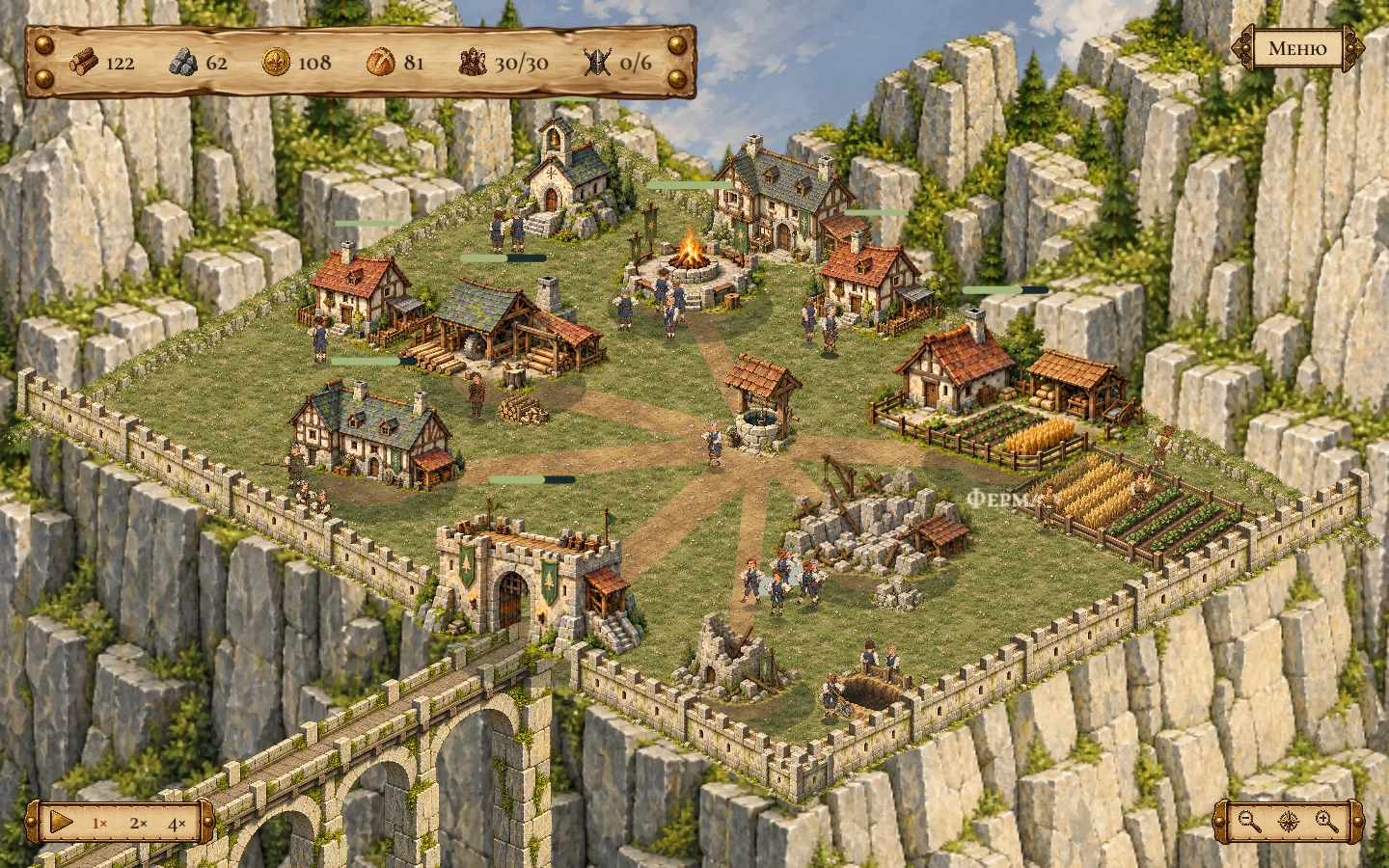
I love games. I’ve been playing them since I was a kid, and I still do. As for how many hours I’ve spent on them… let’s not get into that.
Dota, Deadlock, Factorio, Project Zomboid, Outer Wilds, SOMA, Prey, The Talos Principle. There are so many games that have a permanent place in my heart, and I could happily spend hours talking about any one of them.
And, like pretty much every programmer, I’ve always dreamed of making a game of my own. I’m no exception.
This time, though, I gave myself a very strict rule: three days, maximum. After that, I was forbidden from coming back to the project. Otherwise I knew exactly how this would end: an ever-growing game that I would keep tinkering with forever.
So here’s how those three ridiculously absorbing days went.
Day one: a castle made of shapes
I started by throwing ideas, possibilities, and resources around until I arrived at something I might actually finish: one or two missions, with a play session of roughly 15 minutes.
I wanted to borrow the wonderful castle economy of Stronghold and mix it with tower defense. You have a castle. Waves of enemies attack it. You hold the line. That’s it. That was the scope. Allegedly.
I picked PixiJS for the rendering because I already knew it. JavaScript for the game logic, sprites for the visuals, and AI tools for the images, sound, and music.
But on the first day, I worked exclusively on logic and architecture. Everything on screen was made of simple geometric shapes. Before dressing anything up, I wanted to know whether the mechanics worked, whether there was a challenge, and whether a hard-earned victory could actually feel good.
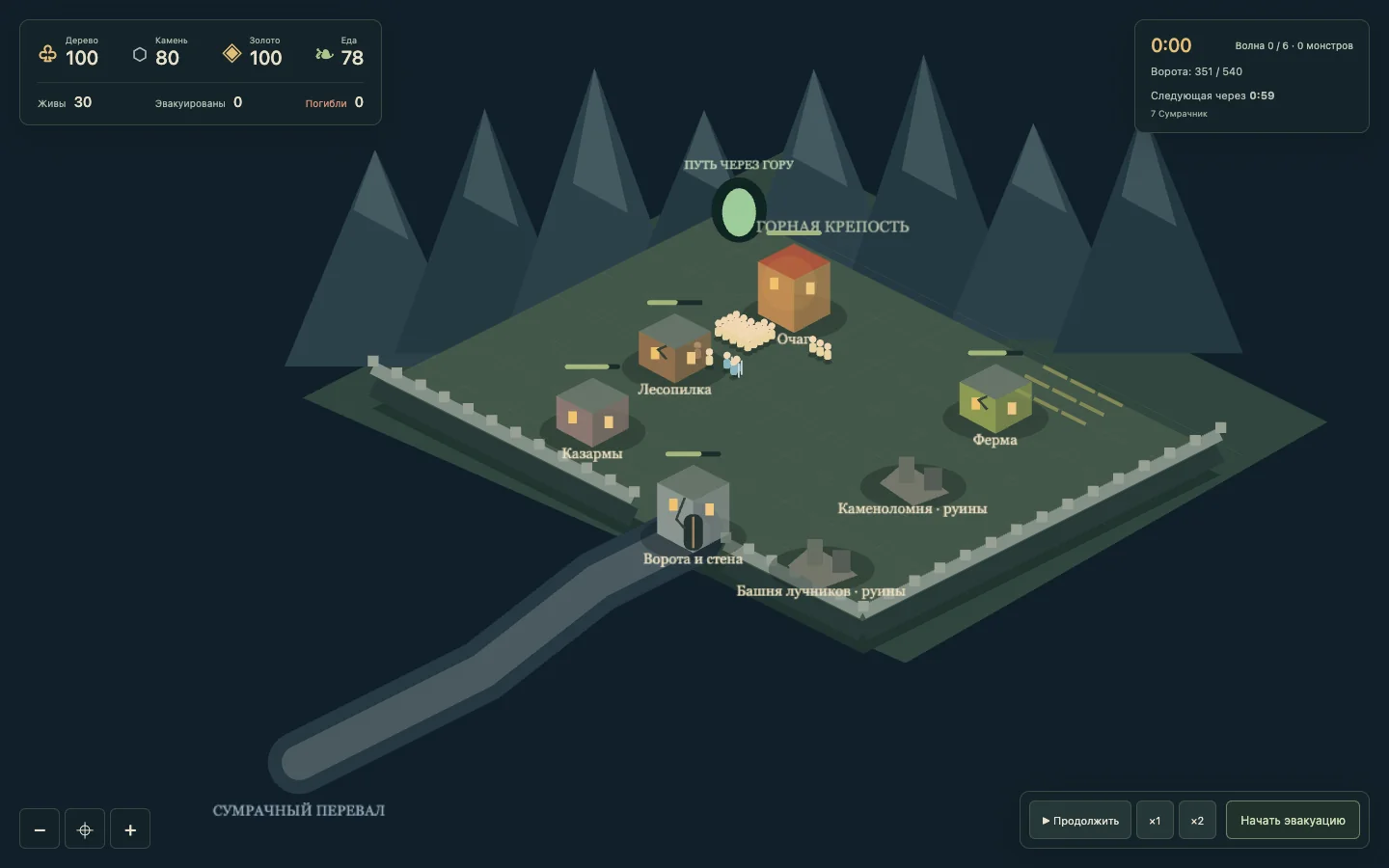
On paper, and in that little schematic version of the game, it seemed promising. I kept messing with mechanics and ideas until three in the morning, then fell asleep hugging my laptop.
Excellent project management. No notes.
Day two: “one building” is apparently 40 assets
The second day was for generating art, music, and sound. I used ElevenLabs for music and voices, and OpenAI for images.
Sound effects were another story. My personal success rate with ElevenLabs for those felt like about 20%. Most attempts just didn’t give me what I needed.
I’d give the final images a 7 out of 10. Sometimes I look at the differences in quality and resolution between assets and feel my eye twitch. But the clock was running, and I couldn’t stop to fix everything.
Generating all the assets in the right format, proportions, and visual style took more than six hours. Part of the problem was that every building had two or three upgrade variants, each changing its appearance. Buildings could also be destroyed, and that needed to be visible too.
By the time all the combinations were accounted for, a single little house could mean 25–40 assets. T_T
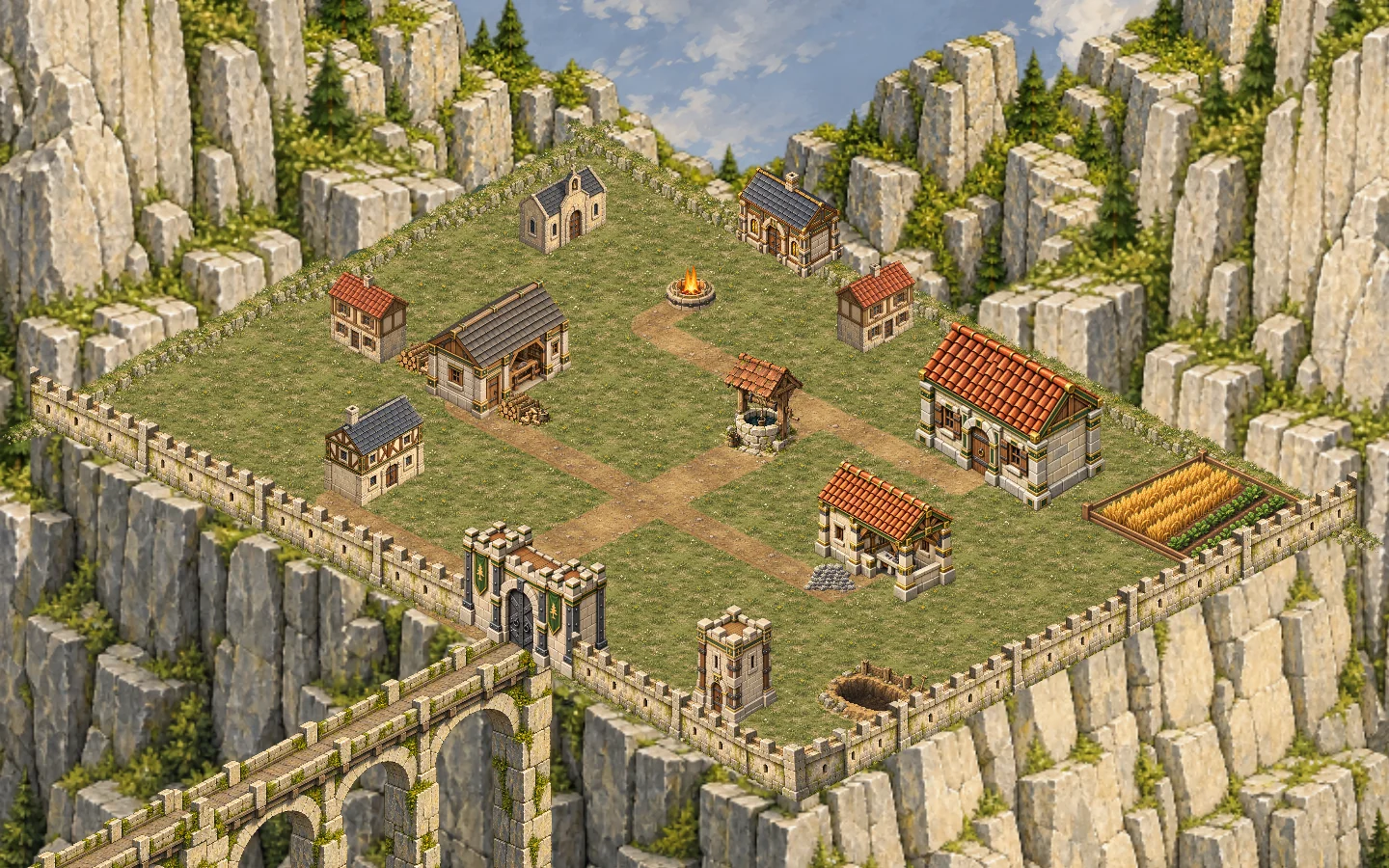
A lot of fiddling. And somehow that still wasn’t the hardest part.
The villagers were where I really suffered
A villager is a collection of 2D sprites: a head, a torso, forearms, hands, thighs, lower legs. Roughly speaking, a tiny person assembled out of parts.
Turning left or right was easy enough: mirror the image. But villagers could also walk away from the camera, so I needed to show their backs. There goes another set of sprites.
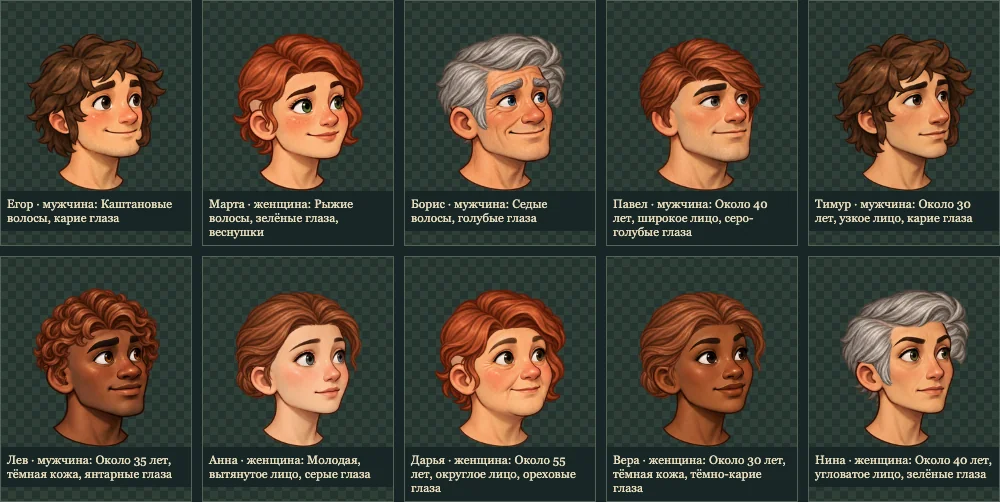
Then all those pieces had to stay in the right positions relative to one another. Each needed the right drawing order, or a hand would pass through a chest, an arm would end up behind the wrong body part, and so on.
And the villagers could do quite a lot: fight, chop wood, sing, talk to each other, harvest crops… Every action meant another animation, another set of layer changes, another chance for something to look completely wrong.
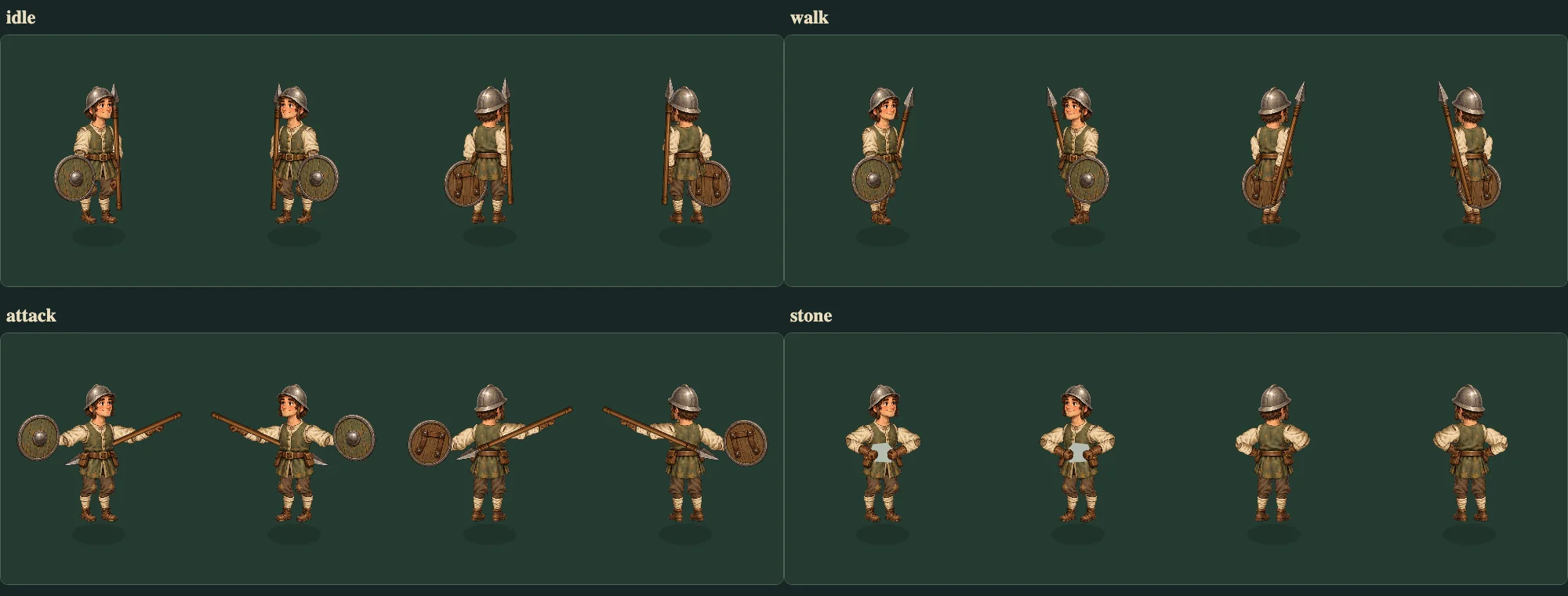
I think I spent about five hours just getting the different animations and layers to behave. And I still didn’t finish: there are a couple of bugs left.
Day three: monsters, a throne room, and nonsense voices
By the third day, a mission was playable. The villagers were living their little lives, monsters were coming in, music was playing. I had one last day to decide what deserved the remaining time.
For the monsters, I decided against giving them the same complicated treatment as the villagers. I generated a batch of images and let them move around like sliding cutouts. Honestly, I liked it. It made the contrast between the two sides more obvious.
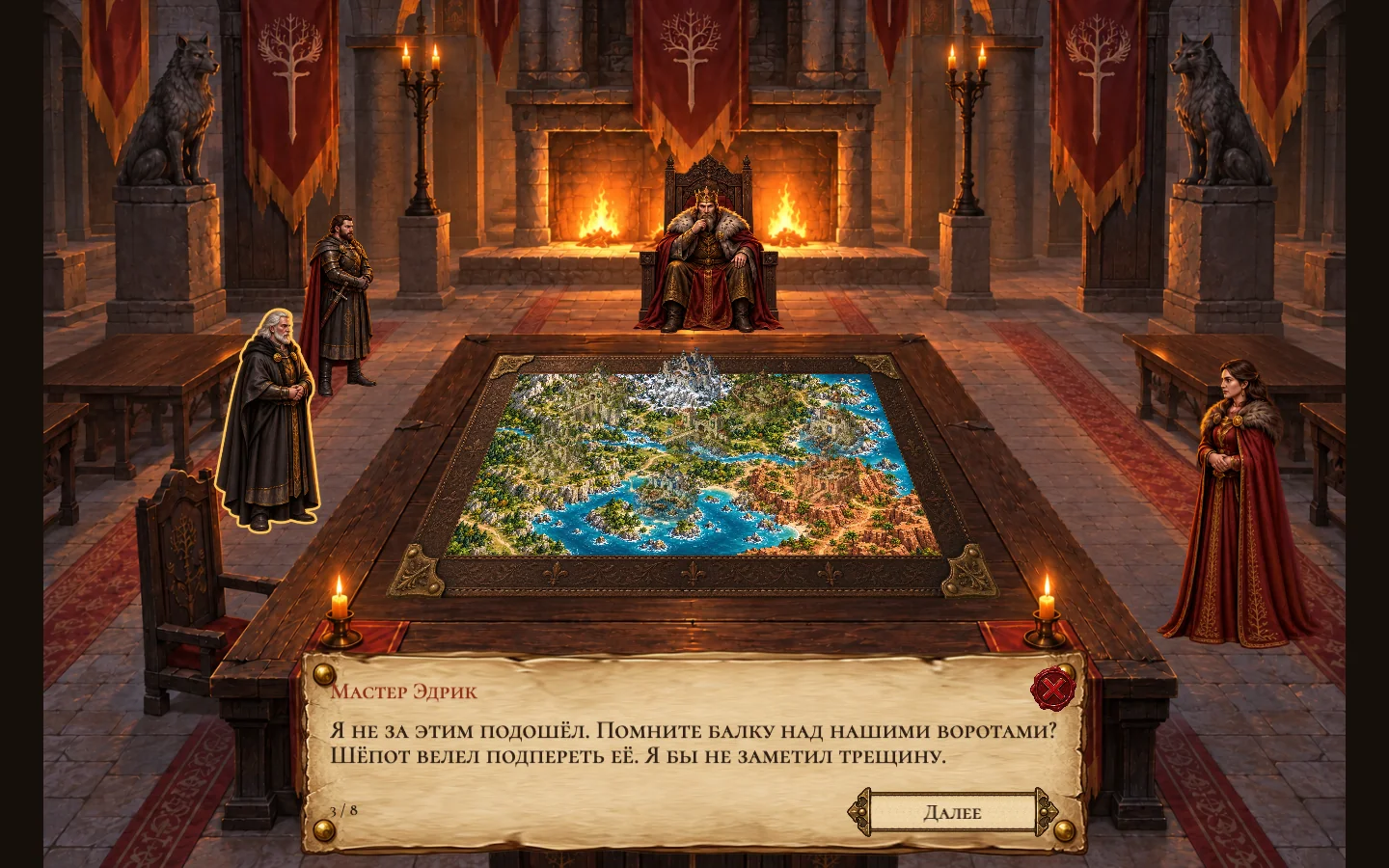
Then came the throne room: a hub between missions where you could talk to NPCs, buy upgrades, and choose where to go next.
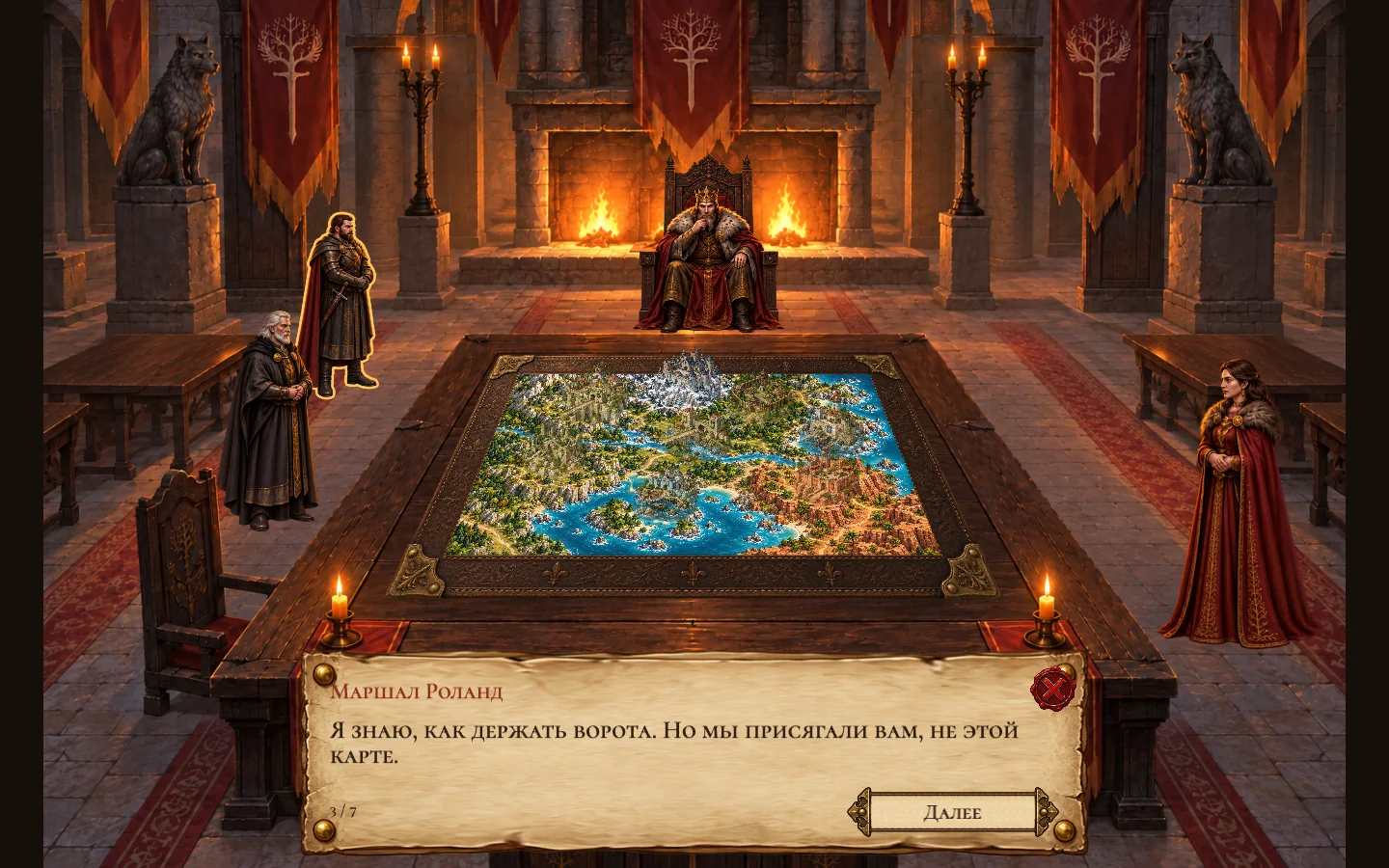
By that point, about 95% of the logic needed to create another mission was already there. I asked a separate AI agent to build the second mission using the existing assets while I kept working on everything around it.
One of my favorite parts was generating the character voices. I wanted an invented language, with The Sims as a reference: that funny, expressive babbling where you don’t need to understand the words to get the mood.
I generated three male and three female phrases per action, covering around 40 different actions in total. That was a lot of delightful nonsense.
Sound effects were much less delightful to find. I ended up digging through free sound libraries online, listening to piles of stuff that didn’t fit, and picking out the few sounds that did.
The final boss was asset loading
By the evening of day three, I thought I was done. I had no energy left, and I decided to publish what I had.
That was when I realized I’d forgotten something rather important: optimizing how all those assets loaded.
So I sacrificed some sleep to avoid breaking my own deadline. Which is very funny, really. I set the deadline myself, then managed to burn myself out trying to obey it. Lol.
I’d call that a successful experiment
I think I pulled it off. More than that, I loved doing it.
My favorite part was probably designing the villagers’ state machines and watching all those little behaviors come together. The way they run through town to escape the monsters is so ridiculously funny. I can’t help laughing at them.
For me, the experiment was a success.
If you’d like to see how far those three days got me, you can play The Last Hearth here.